
Introduction: Setting the Stage for Europe’s Green Revolution
Tired of endless waste? Overflowing bins. Short-lived products. Rising prices for raw materials. Europe is, too, and in 2026, it’s pushing back with a clear plan.
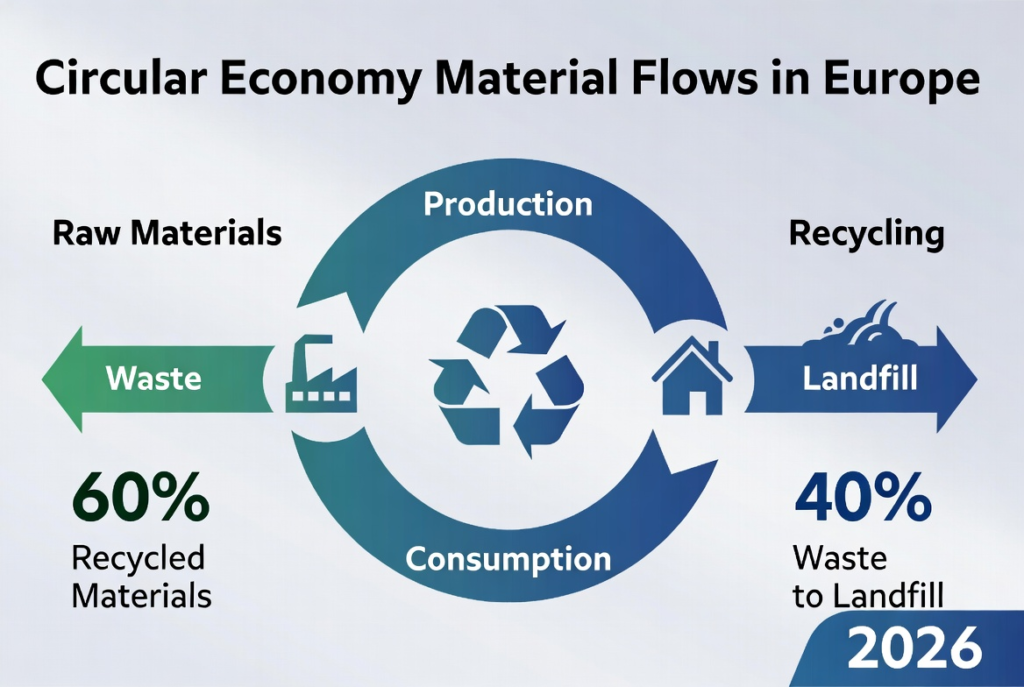
Enter the circular economy. At its core, it’s a simple idea. Instead of the old “take–make–waste” model, Europe wants systems that reuse, repair, recycle, and regenerate. Products last longer. Materials stay in use. Waste becomes the exception, not the rule.
This shift has been building for years, but 2026 marks the turning point. The long-awaited Circular Economy Act 2026 will reshape business product design, city waste management,t and consumer everyday choices. For Europe, it’s not just an environmental move but also an economic one.
The timing matters. Climate pressures are rising. Key resources are getting harder to secure. Global supply chains remain fragile. Europe’s circular model aims to tackle all three at once: cutting emissions, reducing dependence on imports, and making the economy more resilient to shocks.
There are already signs it’s working.
Quick fact:
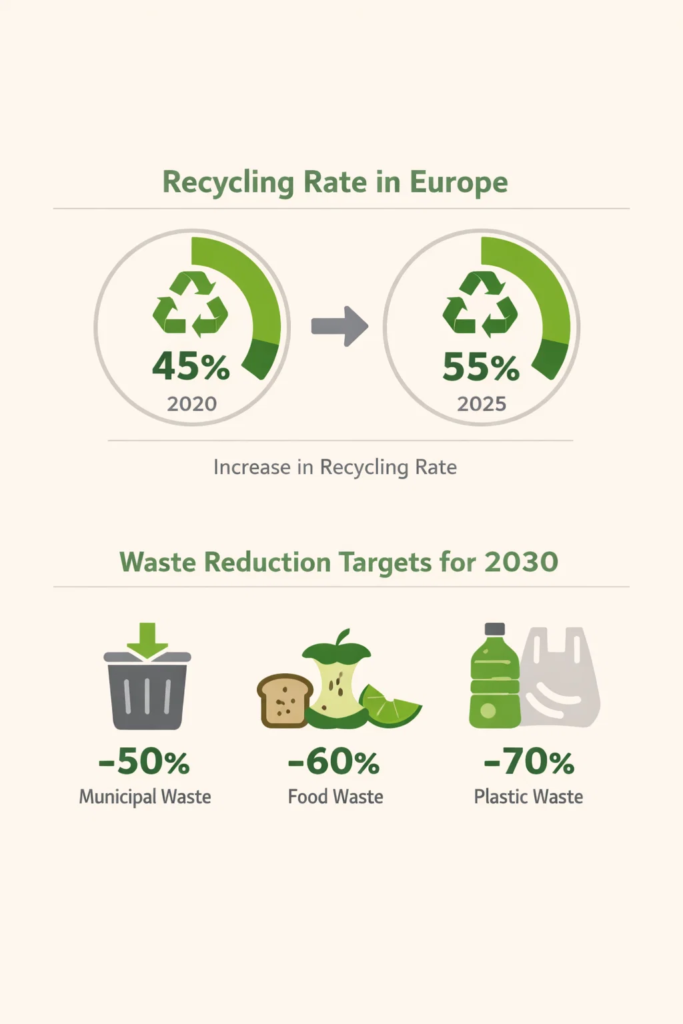
In 2025, Europe recycled around 55 percent of municipal waste, up from about 45 percent in 2020, according to Eurostat. That progress gives policymakers confidence to go further.
But laws alone won’t drive change. Businesses are redesigning products. Cities are testing new reuse systems. And individuals are rethinking how they buy, repair, and discard everyday items.
This post breaks it all down. We’ll look at what the Circular Economy Act 2026 really means, who’s leading Europe’s green innovation push, and, most importantly, how you can be part of the circular shift, whether you run a company or want to waste less at home.
2. Understanding the Circular Economy Act: Europe’s Bold Policy Framework
Europe’s circular push didn’t appear overnight. The Circular Economy Act 2026 builds directly on the EU’s 2020 Circular Economy Action Plan, which first set out to redesign how products are made, used, and reused. What changes in 2026 is the level of ambition.
The new Act tightens targets, adds enforcement teeth, and expands rules across more sectors, from packaging and electronics to food and farming. The goal is clear: make circularity the default, not a niche green option.
What the Circular Economy Act 2026 actually does
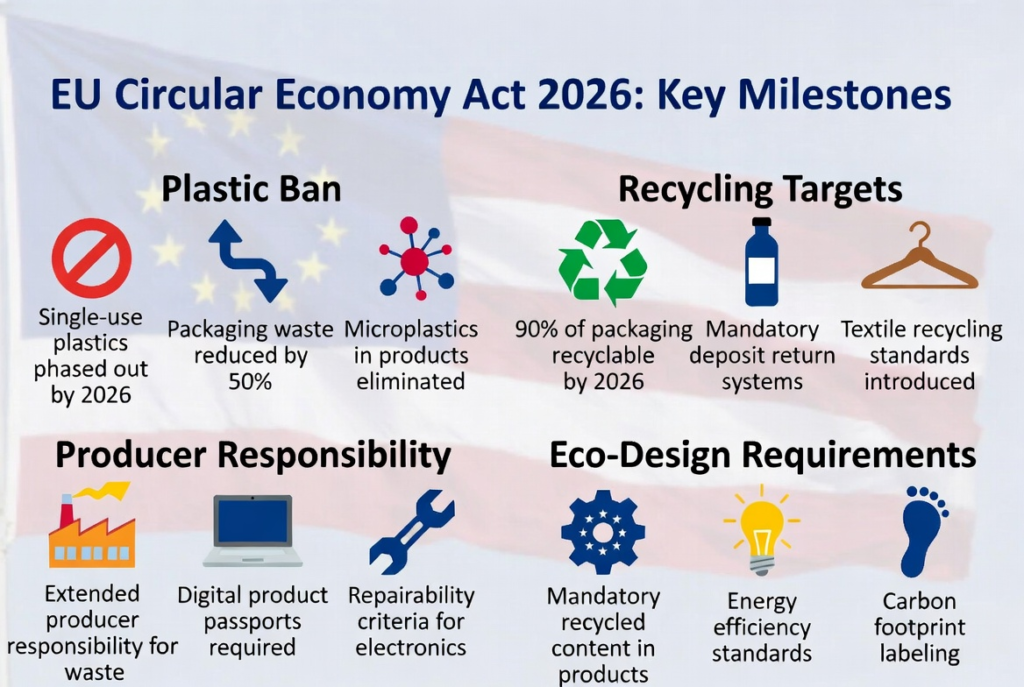
At its heart, the Act rewrites the rules of production and waste. Key provisions include:
- Bans on single-use plastics
Many disposable items are phased out entirely, with reusable or compostable alternatives required instead. - Mandatory recycling and reuse quotas
Companies must meet higher minimum recycled content levels, especially in packaging, textiles, and electronics. - Extended Producer Responsibility (EPR)
Producers are responsible for what happens to their products after use, including collection, repair, and recycling. - Incentives for circular technology
Tax breaks, grants, and public funding support repair services, material recovery, and eco-design innovation. - Stricter rules on harmful chemicals
The Act supports the phase-out of dangerous pesticides and industrial chemicals that block safe reuse and recycling.
In agriculture, this matters. Hazardous pesticides contaminate soil and water, making circular farming impossible. By limiting these chemicals, the Act links clean food systems with long-term soil health and lower emissions.
Key Statistics: Europe’s Waste and Resource Challenge
- The EU generates around 2.5 billion tonnes of waste each year.
The Circular Economy Act aims to cut this by 30 percent by 2030, according to the European Commission. - Pesticide use in EU farming has already fallen by about 20 percent since 2020.
The new targets aim for a further 50 percent reduction in the coming years.
Why geopolitics matters here, too
Circular policy isn’t just green, it’s strategic. Europe relies heavily on imported raw materials, including rare earths used in batteries, wind turbines, and electric vehicles. The Act supports sustainable sourcing within Europe, including projects linked to Greenland’s rare earth reserves, to reduce dependence on unstable global supply chains.
The long-term payoff? Fewer imports, more local jobs, and industries built around repair, reuse, and innovative design. Europe isn’t just cleaning up waste. It’s reshaping how its economy works.
3. Implications for Sustainable Business and Tech in Europe
For businesses, the Circular Economy Act 2026 is less a constraint and more a reset button. Linear supply chains are expensive, fragile, and wasteful. Circular ones are proving to be leaner, cheaper, and easier to defend during global shocks.
Across Europe, companies are already adapting, often faster than the law requires.
How business models are shifting
The most significant change is upstream. Firms are redesigning products and supply chains to keep materials in use longer.
That means:
- Designing for repair and reuse, not disposal
- Using recycled inputs to cut exposure to volatile raw material prices
- Localising supply chains to reduce transport costs and emissions
These shifts often save money. Repairable products lower warranty costs. Recycled materials reduce import risks. Waste becomes a resource instead of a liability.
The tech driving circular growth
Technology is accelerating the transition. Three areas stand out:
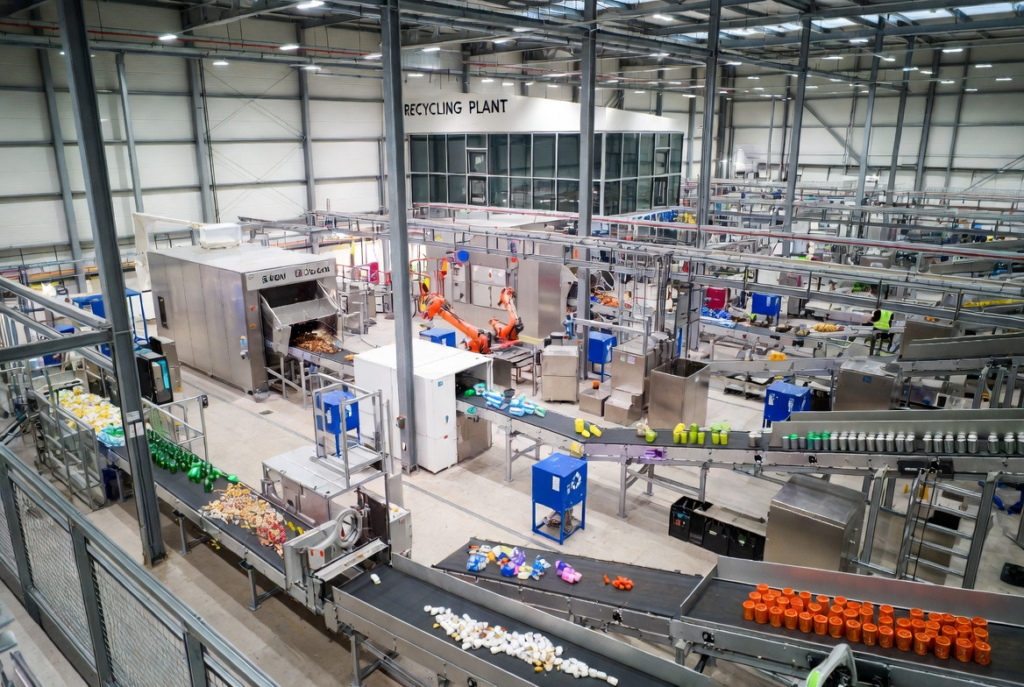
- AI-driven recycling systems
Intelligent sorting machines now identify plastics, metals, and textiles with near-human accuracy, improving recycling rates and material quality. - Blockchain for traceability
Digital product passports track materials from source to reuse, helping companies meet compliance rules while boosting consumer trust. - Bio-based and regenerative materials
From algae-based packaging to mushroom leather, biomaterials are replacing fossil-based inputs in fashion, construction, and food packaging.
Circular innovation in action
Europe already offers clear success stories.
In Germany, carmakers are building closed-loop systems for electric vehicles. Used EV batteries are repurposed for grid storage before being recycled for raw materials. It cuts costs and eases pressure on lithium and cobalt supply.
In Sweden, cities like Malmö and Stockholm are moving toward near-zero-waste urban systems, combining repair hubs, reuse centres, and advanced district recycling. Landfill use has dropped to minimal levels.
Economic Impact Stats: Growth in Green Sectors
- The circular economy could add up to €1.8 trillion to EU GDP by 2030, according to the Ellen MacArthur Foundation.
- Sustainability-focused tech investments reached around €50 billion in 2025 and are projected to double by 2028.
Why geopolitics matters for business
Circular systems also reduce strategic risk. By supporting sustainable resource extraction and recycling, including rare-earth projects linked to Greenland, the EU reduces dependence on unstable global suppliers.
For entrepreneurs and established firms alike, the message is clear. Circular isn’t just greener. It’s where Europe’s next wave of competitive growth is coming from.
4. Spotlight on Innovative Companies: Leaders in Recycling, Renewables, and Fashion
Policy sets the direction. Companies make it real. Across Europe, a growing group of firms is proving that circular models can cut waste and turn a profit.
These are not small pilots. They are large-scale shifts, already shaping how Europe produces and consumes.
Recycling pioneers turning waste into value
Few companies show the scale of circular change better than Veolia in France. Long known for waste management, the firm now runs advanced plastic-to-fuel and chemical recycling systems across Europe.
Instead of downcycling plastic into lower-value products, Veolia breaks it back into usable raw materials. Those materials re-enter manufacturing, reducing the need for virgin fossil inputs. For cities and manufacturers, that means lower landfill use and a more stable material supply.
Renewables built for reuse
In Denmark, Ørsted is pushing circular design into offshore wind. Turbines are now built with modular parts, making them easier to repair, upgrade, and eventually recycle.
Blades, once a significant source of waste, are being redesigned to re-enter production cycles. The result is cleaner energy with a smaller material footprint, precisely what the Circular Economy Act is pushing for.
Meet the companies turning old clothes into new trends
Fashion is one of Europe’s most waste-heavy industries. Some brands are changing that fast.
- H&M (Sweden) now uses recycled cotton and polyester at scale, while expanding repair and resale programs across EU markets.
- Patagonia, with strong European operations, has made durability and repair a core part of its business model, not a marketing add-on.
These shifts are shaping what consumers see in stores right now. If you’re curious how this looks on the ground, our Spring Fashion Trends guide highlights how eco-friendly styles are moving mainstream.
Country spotlights: circular ideas, local solutions.
Innovation doesn’t stop at big brands.
- The Netherlands is leading in urban mining, extracting metals and materials from old buildings, electronics, and infrastructure.
- Italy is turning food waste into biogas, powering homes while cutting methane emissions from landfills.
Both approaches reduce imports and keep value local.
Innovation by the Numbers: Company Milestones
- Recycling firms processed around 60 million tonnes of e-waste in the EU in 2025, according to UN data.
- Renewable energy now supplies about 40 percent of EU electricity, up from roughly 25 percent in 2020.
The pattern is clear. Europe’s circular leaders are not sacrificing growth. They’re building it differently, with less waste, fewer risks, and products designed to last.
5. Practical Guide: Adopting Circular Practices in Travel and Daily Life
The circular economy isn’t just for policymakers or big companies. It works best when it shows up in everyday choices. The good news? You don’t need to change your whole life overnight. Small steps add up fast.
Simple circular habits you can start today
In daily life, focus on using things longer and wasting less:
- Bring reusable shopping bags and containers instead of relying on single-use packaging.
- Repair electronics and appliances before replacing them. Many fixes cost less than you think.
- Compost organic waste where possible, or use local bio-waste collection systems.
- Buy second-hand or refurbished items for clothes, furniture, and tech.
These habits cut waste and often save money.
Smarter ways to travel in Europe
We are steering maritime transport into a new era, leading the European ecosystem with Wave 2 the Future Program.
— Fincantieri (@Fincantieri) December 15, 2025
By bringing innovation on board, we aim to achieve Net-Zero by 2035, fifteen years ahead of the global industry’s 2050 target, thanks to the synergy of thousands of… pic.twitter.com/FLYXwkBfba
Travel is another easy win.
- Book eco-certified hotels in major EU cities. Many now run on renewable energy and limit waste.
- Use public transport apps for trains, trams, and bike-sharing instead of renting cars.
- Choose low-waste tours, such as small-group nature trips or community-led experiences.
- In places like Greenland, look for sustainable expedition operators that limit group sizes and respect fragile ecosystems.
Start small, then build momentum
If you want a simple plan, try this:
- Audit your waste for one week. What do you throw away most?
- Replace one habit at a time, like swapping disposables for reusables.
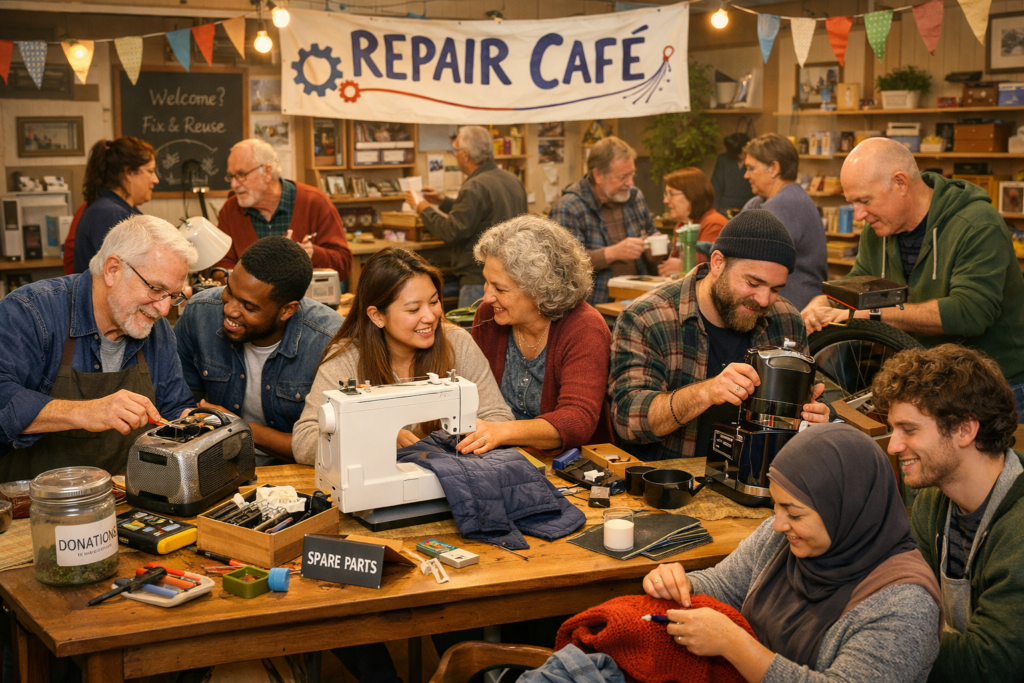
- Scale up socially by joining repair cafés, clothing swaps, or tool-sharing groups.
Personal Impact Stats: Small Changes, Big Results
- EU studies suggest individual circular habits can cut household waste by 20–30 percent.
- Sustainable travel choices can reduce a trip’s carbon footprint by up to 50 percent.
Europe shows this is realistic. From Amsterdam’s bike-sharing networks to Berlin’s repair cafés, circular living is already part of daily life. You can do it too, and it’s easier than it sounds.
6. Conclusion: Europe’s Path to a Sustainable Future
Europe’s circular economy push is no longer a vision. In 2026, it becomes an everyday reality. The Circular Economy Act 2026 sets clear rules, but its real power lies in what it unlocks: more innovative products, stronger businesses, and greater consumer control.
We’ve seen how the Act drives green innovation, reshapes supply chains, and accelerates sustainable business in Europe. From AI-powered recycling to circular fashion and renewable energy, the shift is already creating jobs and reducing waste. Just as importantly, it gives people practical ways to live better, spending less, wasting less, and relying less on fragile global supply chains.
This is why Europe matters in the global sustainability debate. As climate pressure grows and resources tighten, the circular economy offers resilience, not sacrifice.
As Europe leads in 2026, the circular economy isn’t just policy. It’s our shared future.
Have your own circular habits or travel tips? Please share them in the comments. And if you want more insights on eco-friendly innovation, sustainable travel, and life in Europe, subscribe and stay connected.