
Why 2026 Matters for Europe’s Future
On a quiet Sunday morning in a Paris suburb, voters line up outside a local school that has been turned into a polling station. In eastern Germany, campaign posters crowd lampposts in small towns, while in Madrid, regional leaders make final appeals on housing and migration. These are not national elections. No prime ministers or presidents are at stake. Yet across Europe in 2026, these local ballots may say more about the continent’s direction than many headline-grabbing summits in Brussels.
The year ahead will see regional, municipal, and state-level elections across several of the European Union’s most influential countries, including France, Germany, Spain, and Italy. On paper, these votes are about local councils, state parliaments, and regional governments. In practice, they serve as political weather vanes, testing public mood ahead of crucial national elections expected from 2027 onwards.
What makes 2026 different is the backdrop. Europe enters these elections amid persistent inflation pressures, unresolved migration debates, war-related uncertainty, and growing distrust in traditional parties. In many regions, far-right and nationalist movements are polling strongly, often framing local issues as proof that national and EU-level politics are out of touch. These elections will show whether that momentum translates into real governing power or stalls once protest votes meet responsibility.
The stakes go beyond party politics. Regional governments in Europe influence policing priorities, integration policies, public services, and economic planning. Their decisions can shape how migration rules are applied on the ground, how cultural funding is distributed, and how closely regions cooperate with Brussels. For the EU as a whole, strong showings by Eurosceptic parties at the local level could complicate coordination on everything from climate targets to digital regulation.
For everyday readers, this matters in practical ways. Travelers may see changes in how borders are monitored or how security checks are enforced. Expats could feel shifts in local integration policies or administrative attitudes. Businesses operating across borders are watching closely for signs of regulatory divergence or renewed political friction inside the single market.
This article looks ahead to the key elections shaping Europe in 2026, not to predict winners, but to explain what is at stake. From the rise of far-right parties to the ongoing tension between national sovereignty and European federalism, these local votes offer an early glimpse of where Europe may be heading next and what that could mean for its identity, unity, and those who live, work, or travel within it.
2. The Big Picture: Far-Right Momentum Across Europe in 2025–2026
Far-Right Support Hits Record Highs — AfD Polls Around 26% Ahead of German State Votes
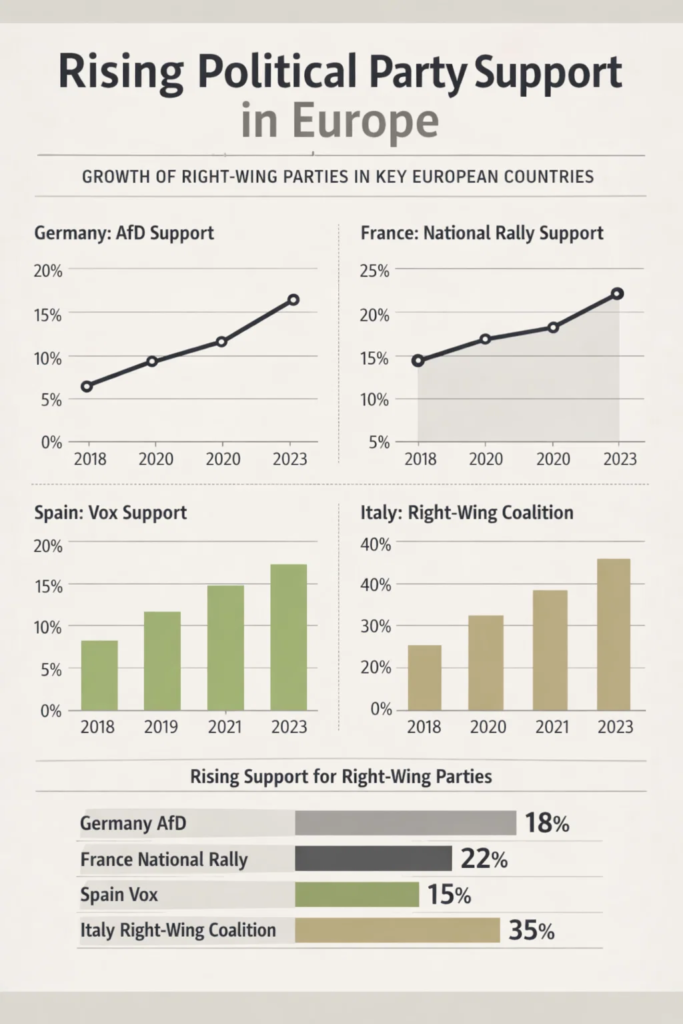
Across Europe, the political ground has been shifting steadily in the run-up to 2026. In several major EU countries, far-right and nationalist parties are no longer fringe players or protest outlets. In many regions, they are polling at, or near, historic highs, forcing mainstream parties to rethink both strategy and substance.
In Germany, the Alternative für Deutschland (AfD) has become the clearest example of this trend. After years hovering around the low 20s nationally, several 2025 opinion polls have placed the party in the mid-20s, with firm support in eastern states facing regional elections in 2026. In some age groups, especially younger male voters, AfD support has grown faster than analysts expected, reflecting frustration over housing, migration, and energy costs rather than nostalgia-driven politics alone.
France’s National Rally (RN) continues to show similar resilience. Despite Marine Le Pen’s repeated presidential losses, the party has consolidated its position locally. Municipal and regional strongholds built over the past decade now serve as launching pads for further gains. Polling through 2025 suggests RN remains the single strongest party in several regions, even as legal and institutional barriers still limit its path to national power.
In Spain, the far-right Vox party has not seen the same surge as its northern counterparts, but it has entrenched itself as a kingmaker in regional politics. By supporting conservative governments in key autonomous communities, Vox has been able to influence policy on education, migration, and historical memory, often without winning outright majorities.
Italy, meanwhile, offers a different dynamic. Prime Minister Giorgia Meloni’s Brothers of Italy party has shifted from insurgent force to governing reality. While national support has stabilised rather than surged, local elections in 2026 will test whether right-wing dominance translates into long-term voter satisfaction, or whether governing constraints blunt the appeal of hardline rhetoric.
Importantly, this rise is not happening in a vacuum. Mainstream parties have responded by hardening their own positions, particularly on migration and internal security. In Germany and France, centrist and centre-right parties have pushed for faster deportations, stricter asylum rules, and expanded police powers. These shifts are designed to reclaim voters, but they also risk validating the framing long promoted by far-right movements.
There are counter-currents too. In major cities and wealthier regions, centrist and green parties continue to hold ground, especially among older voters and university-educated urban populations. Turnout patterns remain uneven, and far-right success often depends on lower participation in local elections, a factor that could still limit their reach.
Why does this matter for 2026? Because local victories normalise policy ideas long before they become national law. When far-right parties gain control of town halls or regional parliaments, debates over border controls, cultural funding, and cooperation with Brussels move from theory into practice. Even without governing alone, these parties can reshape agendas, slow EU-aligned initiatives, and harden political language at every level.
As Europe heads into a dense election cycle, the question is no longer whether far-right parties have momentum, but how deeply that momentum will shape everyday governance across the continent.
3. Country Spotlights: Key Elections and Contenders in 2026
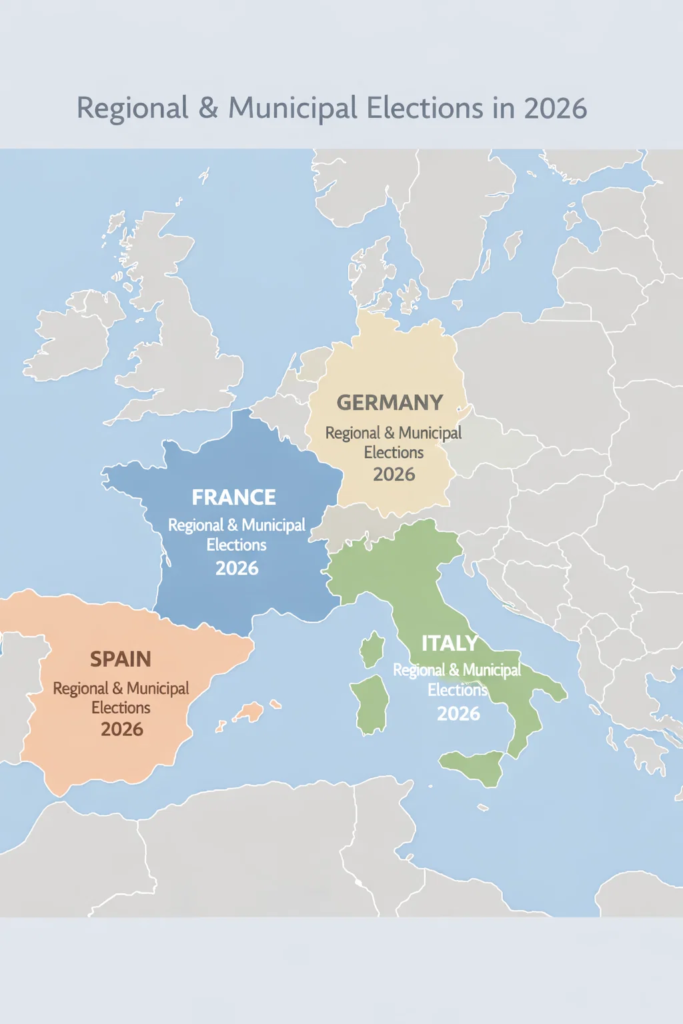
While the broader trend points to rising nationalist and far-right influence, the real test in 2026 will happen country by country, and often region by region. Europe’s political landscape remains fragmented, shaped as much by local identities and economic realities as by ideology. The following spotlights highlight where the stakes are highest and what to watch as voters head to the polls.
Spain — Regional Votes as an Early Warning for 2027
Aragon (February 8), Castilla y León (March 15), Andalusia (June)
Spain’s 2026 regional elections arrive at a delicate moment for the governing Socialists (PSOE). After setbacks in regions such as Extremadura, the party faces growing pressure from a resurgent conservative opposition and a far-right movement that no longer sits on the margins of power.
The centre-right Popular Party (PP) remains PSOE’s main rival, but its path to governing increasingly runs through alliances with Vox. In several autonomous communities, Vox has already proven willing to trade parliamentary support for concrete policy influence, particularly on migration, education, and cultural funding.
Vox’s strength lies less in outright electoral dominance and more in its strategic leverage. By positioning itself as an indispensable coalition partner, the party has helped push regional governments toward stricter migration enforcement and a more confrontational tone toward Madrid and Brussels. These shifts may seem symbolic, but they can have real effects on how asylum rules are applied locally and how regions present themselves to foreign investors and visitors.
For Spain’s tourism-dependent regions, including Andalusia, the implications are closely watched. Tougher rhetoric on migration and identity plays well with some voters. Still, business groups remain wary of policies that could disrupt labour supply, cross-border trade, or the country’s open image ahead of the 2027 general election.
France — Municipal Elections as a Prelude to the 2027 Presidential Race
March 15–22, 2026
France’s municipal elections are often treated as local contests, but in 2026, they will also serve as a national mood check. President Emmanuel Macron’s approval ratings remain low, and repeated government reshuffles have fed a sense of political drift. Against this backdrop, the far-right National Rally (RN) is seeking to deepen its local roots.
Although Marine Le Pen faces legal and institutional barriers that complicate her personal political future, RN, as a party, continues to poll strongly. Years of steady gains at the municipal and regional levels have allowed it to present itself as a governing force rather than a protest movement. In dozens of towns and mid-sized cities, RN candidates are running on platforms focused on security, public order, and “local priority” policies.
The emergence of new mayors aligned with RN would matter beyond symbolism. Municipal leaders in France wieldabsolutel authority over policing priorities, housing policy, and cultural programming. Even without national power, these positions allow the party to shape daily governance and to train a new generation of political figures ahead of 2027.
At the same time, centrist and left-wing parties retain strongholds in major cities such as Paris, Lyon, and Nantes. The municipal elections are therefore unlikely to deliver a uniform shift, but rather a patchwork of outcomes that reflects France’s deep geographic and social divides.
Germany — Regional Elections Test the Federal Centre
March: Baden-Württemberg and Rhineland-Palatinate
September: Sachsen-Anhalt, Berlin, Mecklenburg-Vorpommern
Germany’s 2026 regional elections may be the most closely watched in Europe. They come as the far-right Alternative für Deutschland (AfD) records some of its most substantial polling numbers to date, particularly in eastern states where dissatisfaction with federal politics remains high.
In states such as Saxony-Anhalt and Mecklenburg-Vorpommern, AfD is no longer campaigning as an outsider. Polls through 2025 have shown the party approaching, and in some cases exceeding, a quarter of intended votes, with a powerful appeal among younger voters disillusioned with traditional parties. This has raised concerns about the normalization of hardline positions on migration, national identity, and media freedom.
The elections also serve as a stress test for Chancellor Friedrich Merz’s governing coalition. Losses at the state level would weaken Berlin’s authority and complicate efforts to maintain a unified stance on EU cooperation, security policy, and economic reform.
Western states such as Baden-Württemberg present a different picture. There, AfD support remains lower, and centrist parties continue to dominate urban and industrial regions. The contrast highlights Germany’s enduring east–west divide and why regional elections matter so much in a federal system in which state governments influence national legislation through the Bundesrat.
Italy — Symbolic Municipal Votes and a National Referendum Test
Selected cities, including Venice and Reggio Calabria, + Justice Referendum
Italy’s 2026 elections are more limited in scope but no less politically significant. Municipal contests in high-profile cities such as Venice and Reggio Calabria will offer insight into how voters view Prime Minister Giorgia Meloni’s right-wing coalition after several years in power.
Unlike insurgent far-right parties elsewhere, Meloni’s Brothers of Italy now faces the challenge of incumbency. While national polling has stabilised, local elections tend to expose dissatisfaction over public services, corruption, and economic management. Gains by opposition or protest candidates would signal potential vulnerabilities ahead of the 2027 general election.
Alongside municipal votes, a national justice referendum will test public support for reforms linked to Meloni’s broader agenda on institutional authority and governance. Though technical in nature, the referendum carries symbolic weight, reflecting deeper debates about checks and balances, judicial independence, and executive power.
For international observers, Italy’s 2026 votes will be less about dramatic shifts and more about whether right-wing governance has become the new normal, or whether cracks are beginning to show.
Across these four countries, the pattern is clear: local elections are no longer just local. They shape national trajectories, influence EU-level cooperation, and reveal how deeply political change has taken root. As 2026 unfolds, these regional contests will offer some of the clearest signals yet about Europe’s direction in the years ahead.
4. Core Impacts: How These Elections Could Reshape Europe
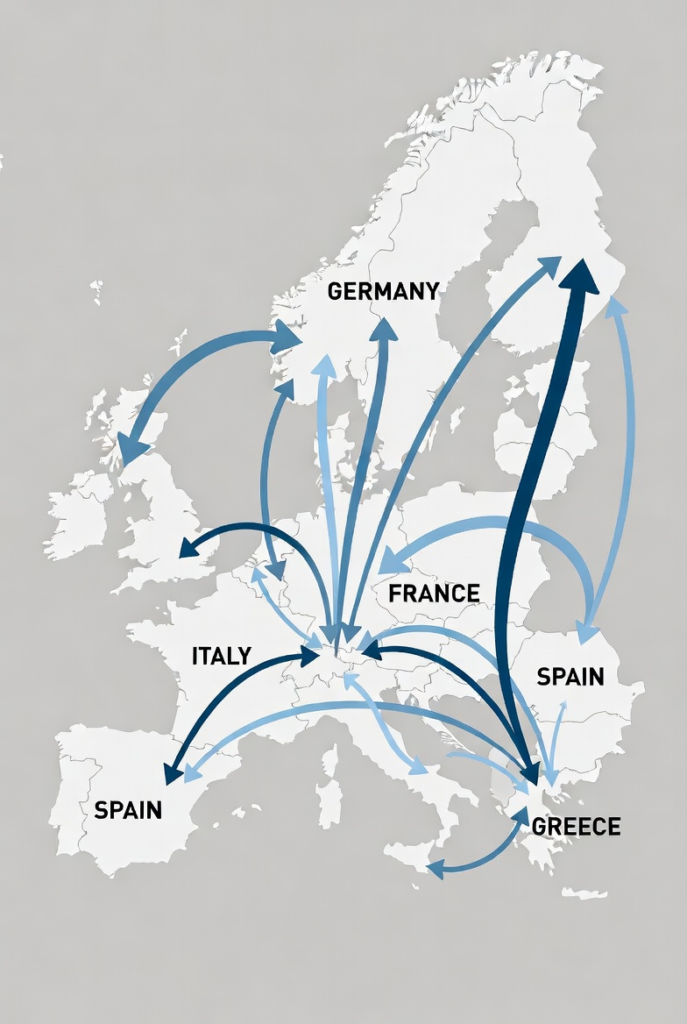
The significance of Europe’s 2026 elections lies less in who wins individual town halls and more in what changes on the ground afterward. Regional governments shape policy implementation, political tone, and administrative priorities. As far-right and nationalist parties gain influence, even without outright majorities, their presence can ripple across borders and institutions.
Migration Policies — Tighter Borders Ahead?
Migration remains the single most unifying issue for Europe’s far-right parties. From Germany to Spain, campaigns increasingly frame local elections as a chance to “restore control” — not just over who arrives, but over how migration rules are enforced day to day.
At the regional and municipal level, this can translate into:
- Stricter local cooperation with national deportation authorities
- Reduced funding for integration and language programmes
- Increased police checks near borders or transport hubs
While Schengen rules are set at the EU and national levels, local governments play a key role in enforcement. A growing number of regions governed by migration-sceptic parties could create a patchwork effect, where internal border checks become more frequent and less predictable, even without formal rule changes.
For travelers and tourists, this may mean:
- Longer waits at internal EU borders during peak periods
- More frequent ID checks on trains and buses
- Heightened scrutiny for non-EU visitors entering through high-pressure regions
For expats and cross-border workers, more authoritarian administrative attitudes can also affect residency renewals, family reunification timelines, and access to local services.
Culture and Identity — A Shift Toward National Sovereignty?
Beyond migration, the 2026 elections touch on a deeper question: Who defines Europe’s identity? Far-right and nationalist parties often argue that cultural policy should sit firmly at the national or regional level, not in Brussels. Their campaigns emphasise local traditions, national history, and linguistic or religious heritage.
Supporters see this as a correction. They argue that:
- EU institutions are too distant from voters
- One-size-fits-all policies ignore regional realities
- Local governments should control education, culture, and social norms
Critics counter that European federalism brings tangible benefits:
- Shared funding for infrastructure and research
- Legal protections for minorities
- Coordinated responses to crises, from pandemics to climate events
In practice, most regions will land somewhere in between. Even nationalist-led administrations continue to rely heavily on EU funds and frameworks, especially in agriculture, transport, and digital development. The tension is less about leaving the EU than about reshaping how visibly European governance operates at the local level.
Practical Stakes for Travelers, Expats, and Businesses
While political debates can feel abstract, the outcomes of regional elections often surface in practical ways.
Travel freedom:
An increase in security-focused regional governments may lead to extended border checks or tighter local enforcement, potentially disrupting the smoothness of Schengen travel, especially in border regions and major transit corridors.
Digital privacy:
Several far-right parties are sceptical of EU-wide digital rules, including data-sharing limits and future updates to frameworks such as the GDPR. While regions cannot rewrite EU law, they can influence how enthusiastically regulations are applied or challenged, particularly around policing, surveillance, and public data use.
Cross-border business:
For companies operating across the EU, political fragmentation raises concerns about:
- Regulatory divergence
- Slower approvals and permits
- Shifting investment incentives at the regional level
EU data already shows that regions with stable governance and predictable regulatory environments attract higher levels of foreign direct investment. Political volatility, even at the local level, can be enough to delay decisions or reroute capital elsewhere.
Taken together, the 2026 elections highlight how Europe’s future is increasingly shaped from the bottom up. Regional outcomes may not rewrite treaties or dismantle institutions overnight. Still, they can quietly recalibrate how open, cooperative, and predictable Europe feels, especially to those who cross its borders to live, work, or visit.
5. Balanced Perspectives: Federalism vs. National Sovereignty
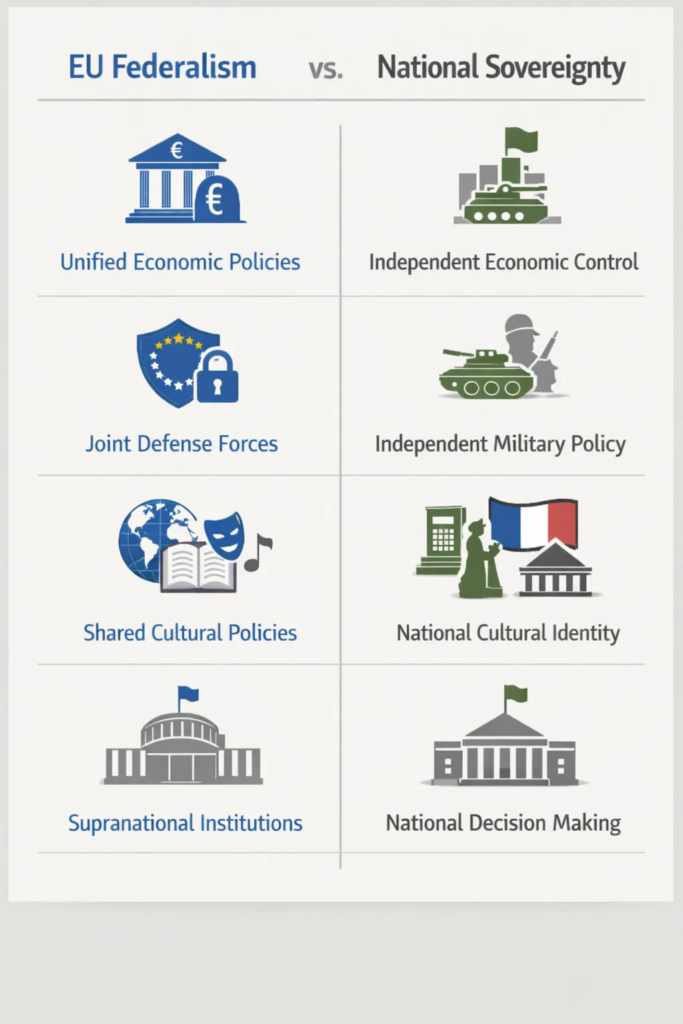
As Europe approaches a dense election cycle, one debate cuts across borders and party lines: how much power should sit with the EU — and how much should return to national or regional governments? The 2026 elections will not settle this question, but they will shape how it is answered in practice.
For pro-EU centrists, federal cooperation remains a cornerstone of stability. Shared rules on trade, travel, and data protection are seen as essential in a world marked by geopolitical rivalry and economic uncertainty. EU integration, they argue, gives smaller and mid-sized states the leverage they would not have on their own, whether negotiating trade deals, managing external borders, or coordinating sanctions and security policy.
Supporters also point to tangible benefits. EU funding supports regional infrastructure, research hubs, and green transition projects. Common standards reduce friction for businesses and protect consumers and workers across borders. From this perspective, weakening EU authority risks fragmentation and higher costs for citizens who rely on a predictable, rules-based system.
Far-right and nationalist leaders see it differently—their argument centres on responsiveness and control. Decisions on migration, culture, education, and policing, they say, should reflect local realities rather than EU-wide compromises. Brussels is often portrayed as distant, slow-moving, and insulated from voter pressure, a message that resonates in regions feeling left behind by globalisation or demographic change.
Moderate conservatives often occupy a middle ground. While rejecting calls to dismantle the EU, they argue for a recalibration of powers. In this view, the Union should focus on core tasks, trade, external borders, and security, while giving member states and regions more discretion on social and cultural policy. This position has gained traction as mainstream parties seek to win back voters drifting toward nationalist alternatives.
What makes the 2026 elections important is how these perspectives move from rhetoric into governance. Regional leaders influence how EU directives are implemented, how funds are used, and how openly local administrations cooperate with Brussels. A more substantial nationalist presence at the local level could slow EU-aligned initiatives or push national governments toward more confrontational stances, even without formal treaty changes.
Looking ahead, the results will feed directly into the run-up to the 2027 national elections in several countries. Parties that perform well locally gain credibility, organisational strength, and media visibility. Just as importantly, policy experiments at the regional level often become templates for national platforms.
For the EU as a whole, the direction is unlikely to be binary. Europe is not choosing between unity and disintegration. Instead, the post-2026 landscape will likely be defined by ongoing negotiation between integration and autonomy, between shared rules and local control. How voters respond to that balance in 2026 will help determine what kind of Europe emerges in the years that follow.
6. Profiles of Emerging Leaders — and What They Signal
Beyond party logos and polling curves, Europe’s political shift is increasingly shaped by individual figures rising through local power. The 2026 elections will likely introduce a new cohort of mayors and regional leaders whose influence extends well beyond their jurisdictions. Their profiles offer clues about where Europe’s politics and identity may be heading.
France: Local Faces of the National Rally’s Long Game
In France, the National Rally (RN) has spent years cultivating local leadership to counter its image as a purely national protest movement. Several RN-backed mayoral candidates in mid-sized towns and peri-urban areas are running on managerial rather than ideological platforms — emphasising security, municipal finances, and “orderly coexistence.”
These figures tend to be younger than their predecessors in RN leadership, with professional backgrounds in local administration or small business. Their campaigns avoid overt confrontation with the EU, focusing instead on “local priority” policies such as housing access, policing visibility, and cultural programming.
What it signals:
RN’s strategy suggests a shift from symbolic opposition to normalised local governance. If successful, these mayors could soften the party’s image ahead of 2027 while embedding nationalist ideas into everyday administration.
What visitors may notice:
Little change at first, but potentially stricter rules around public space use, demonstrations, and municipal funding for cultural events.
Germany: AfD Challengers Move From Protest to Permanence
In Germany, the AfD’s next generation of leaders is emerging primarily at the state and municipal level, particularly in eastern regions. Many are campaigning less on grand national narratives and more on local grievances — underfunded infrastructure, school shortages, and perceived neglect by federal authorities.
Some AfD candidates have made a point of professionalising their image, distancing themselves from past controversies while maintaining hardline positions on migration and media criticism. Their growing appeal among younger voters has raised concerns about long-term political realignment rather than short-term protest.
What it signals:
If these candidates secure regional power, it would mark a shift from AfD as a pressure force to AfD as a durable part of Germany’s federal system — even if coalition barriers remain.
What visitors may notice:
In affected regions, a cooler administrative tone toward foreigners and increased emphasis on local identity in public messaging.
Spain and Italy: Pragmatists and Coalition Influencers
In Spain, emerging figures linked to Vox often operate as coalition enforcers rather than headline leaders. Regional representatives gain visibility by pushing specific policy demands on education content, language use, or migration enforcement, while avoiding full responsibility for governance.
Italy’s next generation of right-wing leaders faces a different test. With Giorgia Meloni already in power nationally, rising mayors and regional heads must prove competence rather than opposition. Their focus has shifted toward public services, tourism management, and infrastructure, areas where ideology quickly meets reality.
What it signals:
Southern Europe’s emerging leaders reflect a more transactional nationalism, shaped by economic dependence on tourism and EU funding.
What visitors may notice:
More emphasis on “local traditions” in tourism branding, but limited appetite for policies that risk economic disruption.
A Broader Signal for Europe’s Identity
Taken together, these profiles point to a Europe that is not abruptly turning inward, but rather one in which national and regional identity is becoming more assertive. The rise of pragmatic, locally rooted leaders suggests that political change will come less through dramatic ruptures and more through gradual shifts in governance style.
For Europe’s unity, this presents both a challenge and a test of resilience. If local leaders channel voter frustration into workable policy, the system adapts. If symbolism overtakes governance, tensions with national capitals and Brussels are likely to grow.
For visitors, expats, and international businesses, the message is nuanced: Europe remains open, but increasingly shaped by local political colour. Understanding who governs at the city and regional level may soon matter as much as knowing who sits in the national cabinet.
7. Conclusion: What to Watch — and Why It Matters to You

As Europe moves into 2026, these regional and municipal elections will serve as a barometer of the continent’s political direction. They will not decide who governs nationally, but they will show how far-right and nationalist ideas have moved from the margins into everyday power — and how effectively mainstream parties are responding.
Taken together, the results will offer early signals about the EU’s future path. Strong performances by Eurosceptic parties could harden positions on migration, slow cooperation with Brussels, and reshape the tone of public debate. More mixed outcomes suggest that voter frustration remains real but not decisive, leaving room for compromise, coalition politics, and course correction ahead of the 2027 national elections.
For readers, this is not just abstract politics. Local election outcomes can influence how borders are managed, how welcoming regions feel, and how predictable rules remain. Travelers may notice changes in border checks or security procedures. Expats could experience shifts in local administration, integration policies, or political atmosphere. Businesses operating across borders will be watching for signs of regulatory stability or fragmentation.
The most important takeaway is this: Europe’s political future is increasingly shaped from the ground up. City halls and regional parliaments are becoming testing grounds for ideas that may later define national agendas. Paying attention to these elections now helps avoid surprises later.
There is also room for optimism. High-stakes local elections are a sign of democratic engagement, not decline. Europe’s institutions have absorbed political shocks before, adapting through debate, negotiation, and voter feedback. The coming year may challenge assumptions, but it also offers a chance for democratic recalibration.
Stay informed on Europe’s political winds. Understanding the choices made in 2026 will be key to navigating travel, work, and investment decisions — and to anticipating what lies ahead as Europe approaches its next round of national elections in 2027.